
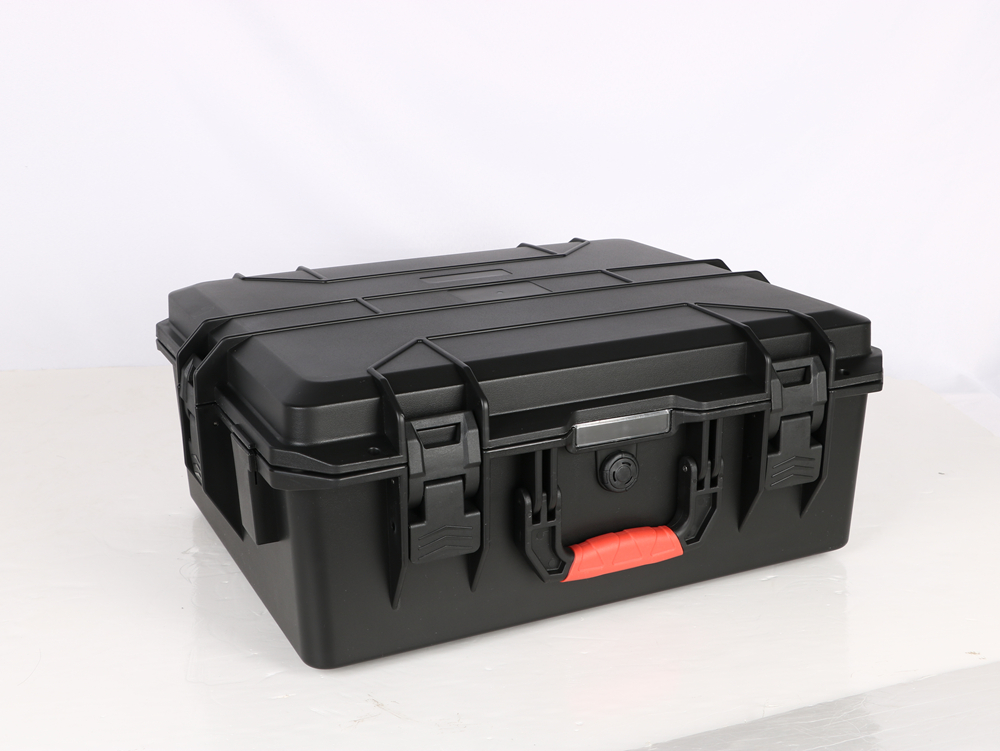
Comparing IP65 vs IP67 sounds simple: one number is higher, so it must offer better protection. For a protective equipment case, that shortcut can lead to the wrong purchase. Both ratings use the same dust digit, but their water digits refer to different exposure tests. The useful question isn't “Which number is bigger?” It is “Which tested condition matches the way this case will be transported, stored, opened and maintained?”
That distinction matters when the case carries a camera system, survey instrument, control unit or field service kit. Rain on a loading dock isn't the same exposure as a case falling into standing water. A catalogue label also doesn't tell you whether a particular size, valve, gasket and closure configuration was included in the test. Before you specify a waterproof protective case, read the code carefully and ask for evidence tied to the model you plan to order.
What an IP Rating Actually Measures
The IP Code is defined by IEC 60529, formally titled Degrees of protection provided by enclosures (IP Code). The IEC publication page describes it as a classification for the protection provided by electrical equipment enclosures. In other words, it evaluates defined enclosure conditions. It isn't a general score for every kind of durability.
How to read the two digits
In a code such as IP65 or IP67, the first digit describes protection against access and solid foreign objects. The second describes protection against water. Intertek's IEC 60529 overview lists a first digit of 6 as dust-tight. It lists the second digit 5 as protection against water jets and 7 as protection against the effects of temporary immersion.
That gives IP65 and IP67 one point in common: the “6” refers to the same dust category. Their water claims differ. IP65 addresses a water-jet test. IP67 addresses a temporary-immersion test. These are defined laboratory conditions, not interchangeable marketing phrases.
What an IP rating does not cover
An IP rating doesn't, by itself, establish drop performance, impact resistance, corrosion resistance, load capacity, temperature range or long-term outdoor life. TÜV Rheinland's environmental simulation overview lists IP code testing separately from corrosion, vibration, shock and transport tests. Those conditions need their own project requirements and suitable evidence.
For a buyer, the practical lesson is straightforward. Treat the waterproof case IP rating as one line in the specification, then review the rest of the application separately. A case may need good ingress protection and still require an independent check for handling, stacking, vibration, chemical exposure or outdoor storage.
What IP65 Means for an Equipment Case
Dust-tight protection
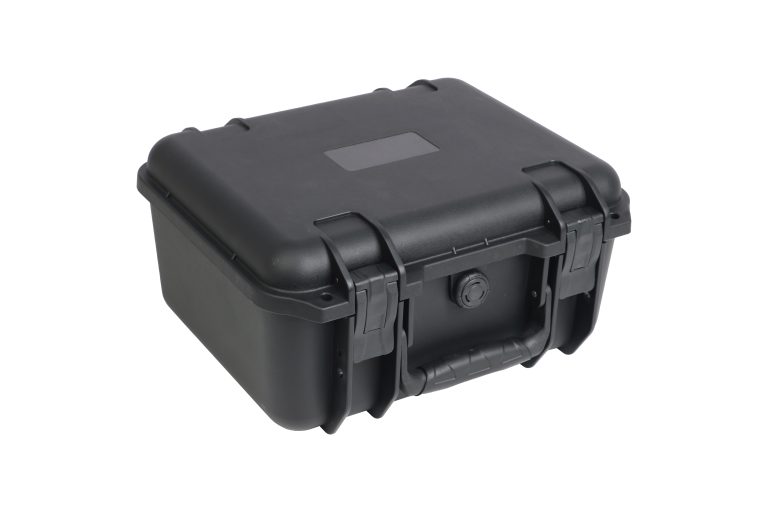
IP65 and IP67 both begin with 6. In the IP Code, that first digit means dust-tight, so the dust category doesn't distinguish these two ratings. It also doesn't establish how the case will perform in a drop, under a stacking load or around corrosive materials. Those are separate questions.
Protection against water jets
In IP65, the second digit 5 is associated with protection against water jets. This can be relevant when the expected exposure involves rain, spray or directed water rather than immersion. Think about an equipment kit being unloaded during bad weather, a closed case sitting near a wet work area, or an enclosure that may be cleaned with water under a controlled procedure.
Don't translate “water jets” into “safe for every washdown.” The result applies to the tested enclosure and the defined test method. It doesn't automatically cover hot water, steam, cleaning chemicals, prolonged exposure or a jet aimed at a damaged sealing surface. Ask how the intended use compares with the evidence the supplier can provide.
Start with the case family and its physical format. Plastic protective cases may suit compact instruments and organized kits, while rotomolded equipment cases provide other formats for transport projects and larger layouts. Those category pages are useful for narrowing the form factor. They are not proof that every displayed model carries the same IP rating.
What IP67 Means for an Equipment Case
The same dust rating, a different water test
IP67 uses the same dust-tight first digit, but its second digit concerns temporary immersion. This is why people searching “what does IP67 waterproof mean” often expect a simple depth-and-time promise. The safer interpretation is narrower: the enclosure was assessed for the effects of temporary immersion under the applicable test conditions.
Temporary immersion is not a blanket waterproof promise
Temporary is the key word. IP67 doesn't mean a case can remain underwater indefinitely, operate as a diving container or tolerate any depth. Clause 6 of IEC 60529 states that an enclosure designated for IPX7 or IPX8 does not automatically need to comply with the IPX5 or IPX6 water-jet tests unless it carries the relevant dual designation. TÜV Rheinland's test overview likewise identifies IPX5 and IPX6 as water-jet conditions and IPX7 as temporary immersion. If your project includes both forceful spray and an immersion risk, request evidence for both conditions.
The tested configuration matters just as much as the code. Shell, lid, gasket, latches, valve, hardware and any openings can affect the enclosure boundary. From a procurement standpoint, verify which complete case configuration was tested and whether every closure must be fully engaged. This is a verification step for the finished case, not a claim that every component has its own portable-case IP rating.
IP65 vs IP67: Which Rating Fits Your Use Case?
Neither rating should be selected in isolation from the exposure. Use the comparison below to frame the procurement discussion.
| Buyer question | IP65 | IP67 |
|---|---|---|
| What water condition does the second digit address? | Water jets | Effects of temporary immersion |
| What dust condition does the first digit address? | Dust-tight | Dust-tight |
| Is it an automatic claim for impact or corrosion? | No | No |
| Should the rating be verified for the exact model and configuration? | Yes | Yes |
| Does the code alone define all real-world handling limits? | No | No |
If the credible exposure is rain and directed spray, evidence for IP65 may be more relevant than an immersion-focused label. If a closed case could briefly enter water during field work or transport, IP67 may be the condition to investigate. Some projects face both. Say so in the enquiry instead of asking for “the highest waterproof rating” without context.
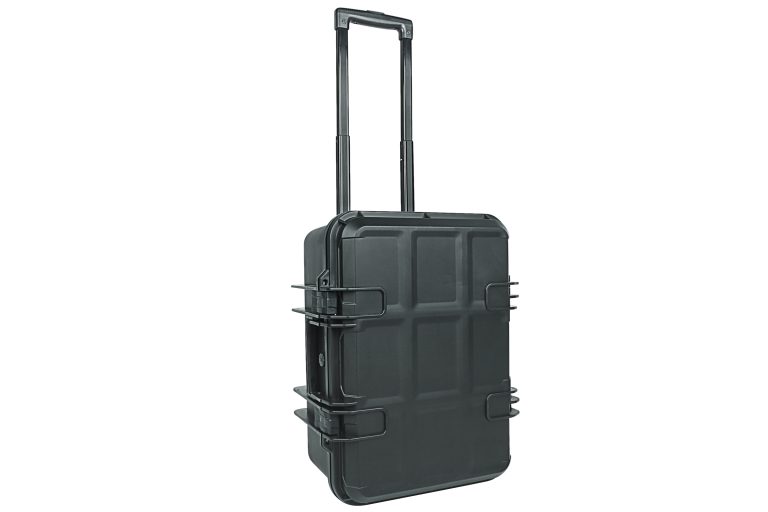
Then look at the layout. A compact rotomolded equipment case example can help you discuss carrying orientation, usable space and accessory positions. A larger equipment case format offers a different starting point for equipment access and handling. These pages show formats for a project conversation; they don't claim that either model has an IP65 or IP67 rating. Request the current specification and model-specific test basis before ordering.
Why You Should Verify the Rating by Model
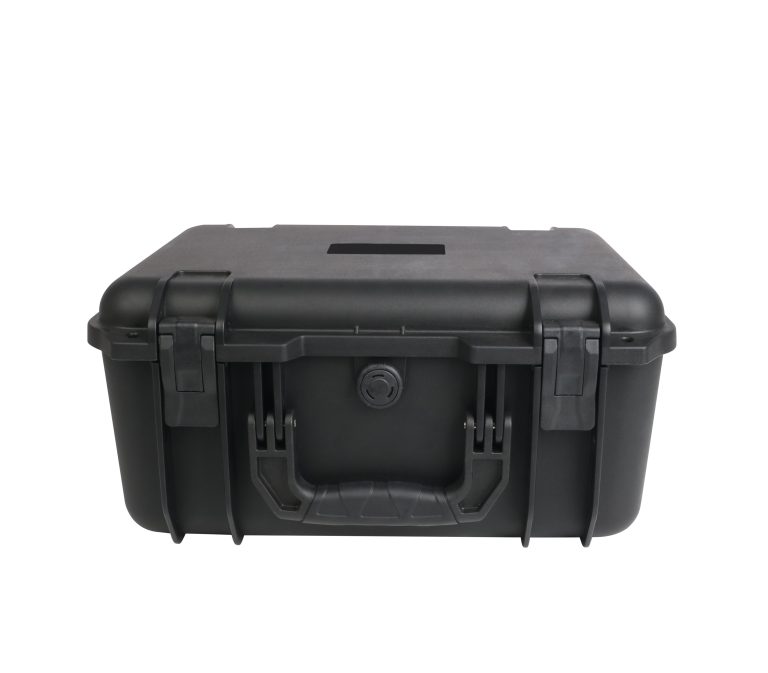
A family-level statement can hide small but important differences. One size may use different hardware. A valve may be optional. A modified panel, cable pass-through or customer-installed fitting can change the enclosure boundary. Even a tested design depends on the gasket being present, clean, correctly seated and compressed by fully closed latches.
Ask the supplier to identify the model number, test configuration, standard edition and supporting report or certificate. Check whether the document describes the complete finished case or only a component. Compare that configuration with the one on the quotation. If you add a connector plate or other penetration later, ask how the change affects the stated protection.
Also confirm the condition of use. Was the test carried out with the case closed and latched? Was a pressure-equalization valve installed? Are there maintenance instructions for the seal? These questions aren't paperwork for its own sake. They connect a laboratory result to the case that arrives at your facility.
A Buyer's Checklist for Waterproof Protective Cases
A useful brief covers more than the two IP digits. Before contacting a supplier, prepare a complete equipment list and record the operating environment as clearly as you can.
- Exposure: Describe rain, spray, temporary immersion, dust, cleaning methods and storage conditions separately.
- Equipment: List the main unit, chargers, cables, spares and any projecting parts.
- Dimensions and weight: Give the size and mass of every item that affects the case or interior layout.
- Access: State which items must be removed first and whether equipment is used while it remains in the case.
- Enclosure details: Ask about the gasket, latches, valves, handles and any optional openings.
- Interior: Define foam, dividers, lid storage and clearance around delicate controls or connectors.
- Handling: Explain carrying, vehicle transport, stacking and storage expectations.
- Evidence: Request the rating, model, tested configuration, applicable standard and supporting document.
- Approval: Agree on what will be checked in a sample before the production order.
You can then review custom case and interior options without losing sight of the ingress requirement. A fitted interior helps organize and support the equipment, but it doesn't create an IP rating. The outer enclosure and its tested configuration remain the basis of the claim.
The best enquiry is specific: “The closed case may be exposed to heavy rain and could briefly fall into shallow water during field use. Please recommend a model and provide the test basis for the proposed configuration.” That gives the supplier something real to evaluate.
FAQ
Q: Is IP67 always better than IP65 for a protective case?
A: No. Both have a dust-tight first digit, but the water digits refer to different tests: water jets for IP65 and temporary immersion for IP67. Choose and verify the rating that matches the expected exposure. If both conditions matter, request evidence for both rather than assuming one result covers the other.
Q: Does IP67 mean a case can stay underwater indefinitely?
A: No. The “7” refers to protection against the effects of temporary immersion under defined test conditions. It isn't a promise of unlimited depth or duration, and it shouldn't be used as a substitute for a purpose-designed underwater enclosure.
Q: Does an IP rating cover impact resistance or corrosion?
A: No. The IP Code focuses on enclosure protection involving access, solid foreign objects and water. Impact, corrosion, temperature, chemical exposure and handling performance need their own specifications and evidence.
Q: What should I ask a supplier before ordering an IP-rated case?
A: Ask for the exact model and configuration covered by the rating, the applicable standard, and the supporting test document. Confirm the gasket, valve, latches and any openings. Then compare the tested condition with your real exposure, handling plan and maintenance process.
IP65 vs IP67 is useful when it starts the right questions. It shouldn't end them. Share your equipment dimensions and operating environment to discuss a suitable case configuration, then verify the rating against the exact model you intend to buy.