

One meter, two very different Mondays. On the first, its owner lifts it from a car and walks into an office. On the second, the same model changes hands in a freight network. A hard case vs soft case debate that ignores those journeys is mostly a debate about taste.
Draw a line for the journey and place the kit on it. The crowded van appears first, then a transfer nobody supervises, stairs and finally a desk barely wider than the instrument. One container may cope with all four points. In other jobs, the usable soft carrier rides inside a separate shipping shell.
Start with the damage you are trying to prevent
Write down the vulnerable features of the equipment. A display may dislike point pressure. A connector can bend when a cable remains attached. A calibrated instrument may need a fixed orientation. Loose accessories can scratch a finished surface even when the outer container looks untouched.
This list is more valuable than a general request for “heavy-duty protection.” It gives the supplier and the internal team observable problems to solve.
A hard shell controls the outside shape
A rigid wall gives an outside load less freedom to press directly into the equipment. That matters in a packed vehicle, a stack or a handoff where the owner loses control. It also creates a fixed boundary for a fitted interior.
After a rough trip, an undamaged shell can open onto a wandering instrument. That is a packing failure hiding inside a strong exterior. Support the heavy pieces and keep accessories from becoming small hammers.
A soft case conforms and carries differently
A soft bag may slip beside a vehicle seat where a rigid box simply will not go. Its lower empty mass helps on foot; documents can stay outside the equipment compartment, and a shoulder strap frees one hand at the office door.
That give in the fabric is also the weakness to examine. Stack another item on top and see what reaches the equipment. Move the charger between pockets and feel for a pressure point. Finally, set the loaded bag on each face users choose in practice.
Compare the actual handling route
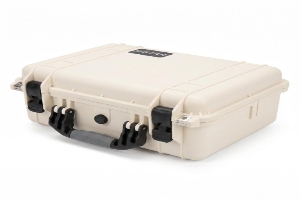
Sketch the journey from storage to use. Include stairs, vehicles, carts, parcel networks, aircraft baggage, site entry and the final work area. Mark who controls the container at each stage.
A soft bag kept with one technician is not exposed like a package moving through a carrier network. A hard case carried only across a workshop may add bulk without solving an important risk.
Count lifts, transfers and waiting periods
A 20-kilometre job can still mean five lifts. The kit leaves a shelf, moves to a trolley and van, stops at security, enters a lift and reaches the bench. Distance is short; handling is not.
Add the waiting places. A wet floor, outdoor queue or shared loading bay changes the brief. For dust or water, describe the event—rain during unloading, for example—and ask what evidence covers the proposed model. The shell’s hardness says nothing about its ingress classification.
Decide whether it ships alone
In one project the reusable case receives the shipping label. In the next it disappears inside a carton or crate, perhaps on a pallet. A soft carrier can play the same inner role when another package takes the distribution loads.
Give the complete arrangement one name and one drawing. Evidence for an empty case, or for the inner carrier alone, does not describe a loaded unit with accessories and overpack.
Look at access and interior control
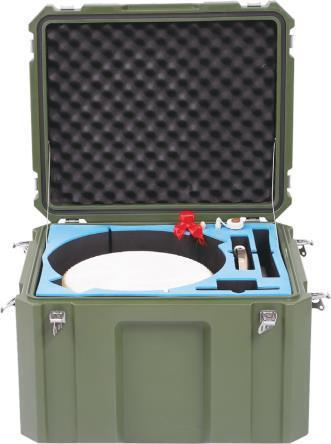
Daily use begins after the journey. The operator still has to find the right lead, lift the instrument without pulling a connector and notice what has not been returned.
With fitted foam, every part has an address. A vacant shape flags a missing tool and the walls prevent casual rubbing. The custom foam inserts guide looks at adjustable layouts alongside repeatable cut interiors.
Ask how often the kit changes
A stable instrument earns a cavity cut to its outline. If models rotate every week, that precision becomes a handicap; dividers, padded modules or a soft organizer tolerate the churn better.
Oversize cavities are not flexibility. They simply let the equipment move. Split the stable core from changing consumables, then give the two groups different forms of organization.
Try the opening sequence
Put the sample on the actual bench, trolley or floor. Open it. Does the lid hit a wall? Do pocket contents fall toward the meter? Is the first tool needed buried underneath the last one?
A rigid lid claims a fixed patch of bench. The soft bag gives up its shape as equipment comes out. Take both to the work surface before deciding which inconvenience is smaller.
Consider weight without looking at empty weight alone
Empty weight is only the first line of the calculation. Add the instrument, insert, batteries, documents and outer package. That is the mass someone will lift.
Carry the result rather than comparing numbers alone. Shift a handle a few centimetres away from the balance point and an equal mass feels worse. Wheels shine in the smooth corridor, then add nothing on stairs or a broken path.
Include storage and return logistics
An unused soft bag may fold into a cupboard. The rigid case keeps its full outline, though it may form a more stable stack. Fleet projects need an answer for the empty return leg as well as the outbound journey.
Cleaning reveals details the brochure misses. Dirt is visible on an open smooth surface; it can remain down a fabric seam or pocket. Run the approved method on both candidates when the kit moves between dirty and controlled areas.
Build a short comparison trial
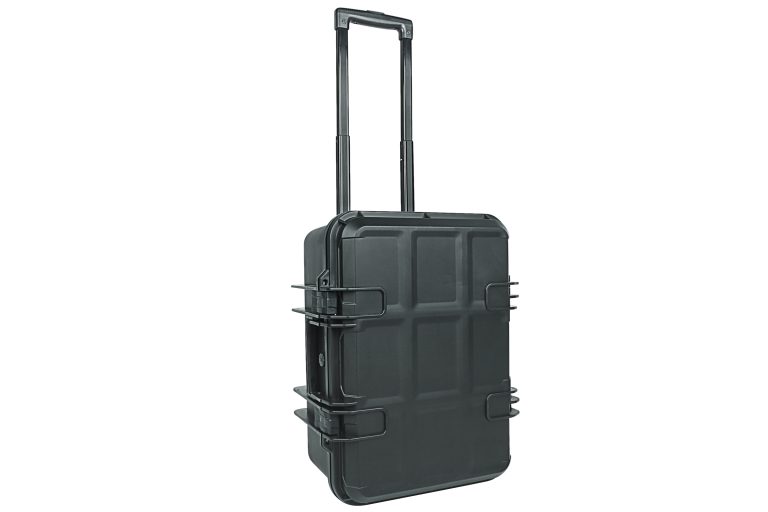
Shortlist formats only after the equipment list and route are clear. The plastic protective case category and rotomolded case category show rigid options for different sizes. Dimensional examples such as the YF-583542 and YF-604050 can help start a layout discussion; their pages are not substitutes for a packed sample review.
Load the actual kit and walk its short route. Put the container in the assigned vehicle space, open it on the usual surface and repack it without coaching. Write down pressure points, movement and wrong reaches. For a shipped unit, a competent packaging specialist should agree the complete configuration and relevant test plan.
Record the result with the sample review guide. Name the sample, contents and route. “Hard case won” will not help the next buyer; “soft bag allowed pressure on the display during van stacking” will.
FAQ
Is a hard case always more protective than a soft case?
No. The rigid wall reduces outside deformation. It cannot rescue a poor interior or stop loose equipment striking itself while the shell stays intact.
When is a soft case a sensible choice?
It can suit controlled personal handling, short routes, changing kits and situations where low empty weight or flexible storage matters. Check outside pressure and pocket loading on a sample.
Can a soft bag go inside a shipping case?
Yes. A soft organizer can serve as the usable inner carrier while a separate outer case or package addresses distribution handling. Document the complete arrangement.
What should I send a supplier for comparison?
Send the equipment list, measurements, labelled photographs, loaded mass and route. Add exposure, access, quantity and the complete outer-package arrangement where one is planned.