
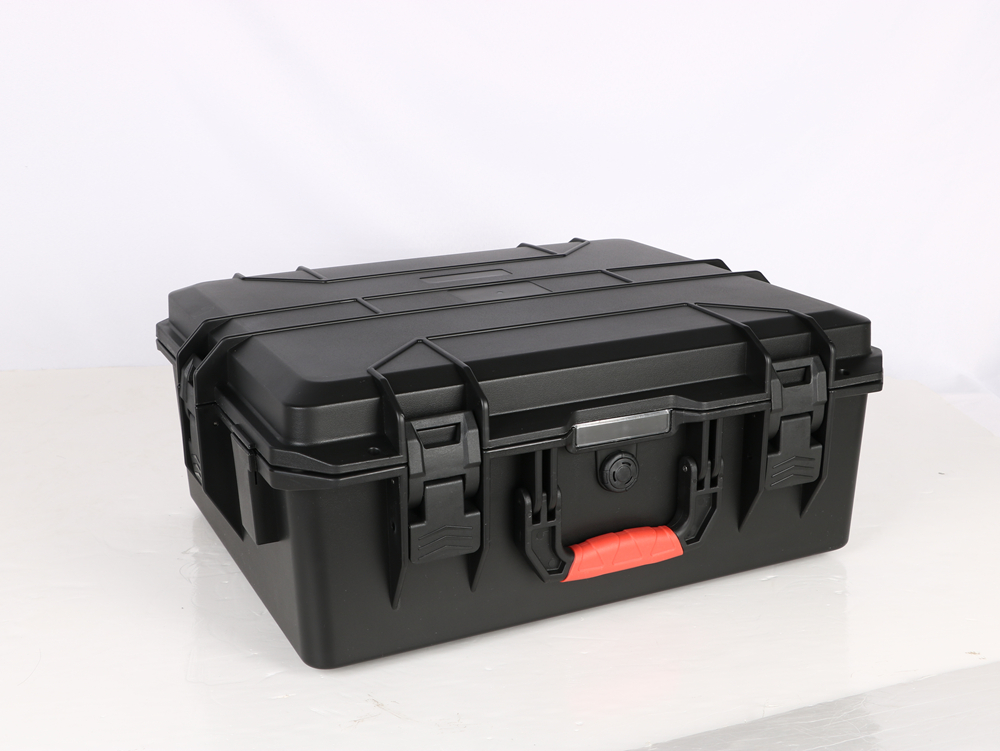
A request arrives with two words in the requirement box: “waterproof case.” The replies do not line up. One says IP65, another says IP67, and a third puts WATERPROOF in large type without naming a test. Because 67 is the biggest number on the page, it is easy to treat it as the winning bid. That is not what the code means.
In practice, IP67 joins two enclosure classifications under stated test conditions. Read the 6 and the 7 separately: one concerns solid matter and the other water. Neither character promises endless submersion, drop survival or protection for whatever happens to be packed inside.
Purchasing therefore needs two things on the same page—the wet or dusty event being planned for, and evidence that names the proposed case configuration.
Split IP67 into two questions
IEC 60529 covers degrees of protection provided by enclosures. Its two digits are not a single score. In IP67, 6 belongs to the solids side of the classification; 7 belongs to the water side.
For solids, level 6 is described as dust-tight under the applicable test. On the water side, 7 concerns temporary immersion under defined conditions. Everyday language tends to stretch both statements, especially when rugged and permanently submersible are used as if they followed automatically.
Keep impact claims out of the first digit
The 6 does not grade overall toughness. Drop resistance, crushing, hinge life and vibration reaching the payload sit outside that digit and need their own evidence.
Consider two samples on a bench. In the first, the shell meets the ingress requirement but a heavy instrument moves in a poor insert. In the second, the insert fits beautifully but nobody can connect the shell to the requested ingress evidence. Both samples still have open work.
Do not stretch temporary immersion into a permanent promise
The 7 comes from a temporary-immersion classification, not an unlimited-underwater promise. A proposal marked IP67 should lead straight to three questions: which model, which closed configuration, and which declaration or report can be reviewed?
Keep depth, duration and setup beside the evidence. Record the seal, closures, valve and openings that were present as well. “Safe underwater in all conditions” drops all of those boundaries and should not appear in the purchasing record.
Describe the wet event in ordinary language
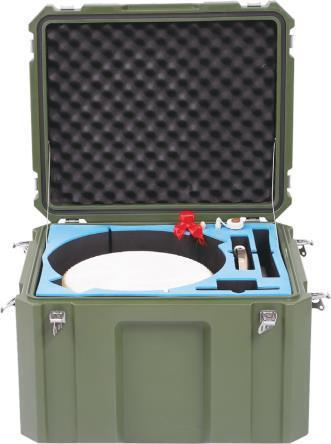
Write the event before choosing the number. Ten minutes of rain on a loading dock is one event. An open vehicle, a wash after field work and an accidental drop into water are three others. Folding them all into “outdoor use” removes the detail needed for selection.
Then write what users do next. Note whether they open the case wet, expect the instrument to start immediately or travel through dust before arrival. A supplier can respond to that account; a broad adjective invites guesswork.
The earlier IP65 vs IP67 guide is useful when the real choice is between water-jet exposure and temporary immersion. It is less useful to ask which number merely sounds stronger.
Remember the open lid
The assessed enclosure is closed. The case in a user's hands may be open in the rain. Outdoor work therefore needs an opening routine as well as a closed-case requirement.
That routine might be simple: move under cover, wipe the exterior, or place the first-needed item where it can be removed without a long search. None of this changes the IP code. It handles the part of the job that occurs after the latch is released.
Give the interior its own job
Ingress protection stops at the enclosure question. It does not prove drop survival, temperature control or freedom from rubbing inside the case. Those outcomes depend on the insert, restraints, clearances and complete packed mass.
Give the outside and inside separate lines in the brief. Describe exposure on one, then support and access for the equipment on the next. The custom case planning page helps bring the equipment list, layout and use into the same discussion.
Tie every claim to one configuration
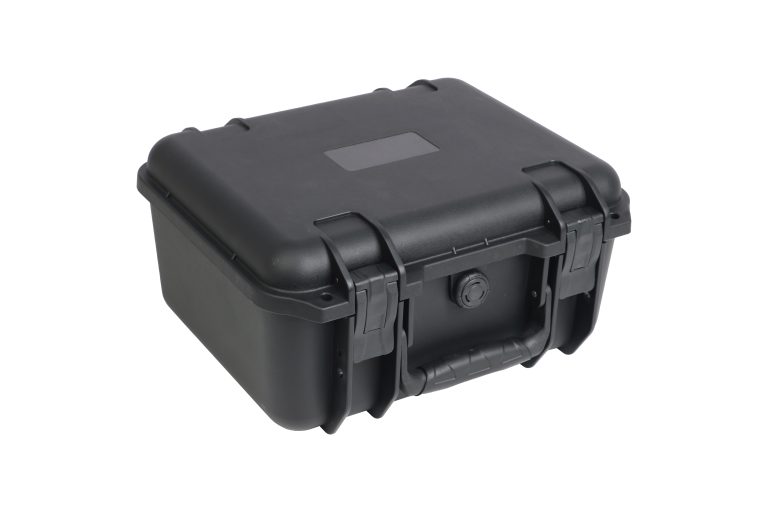
A photograph shows appearance, not the scope of a test. The same is true of a sibling product in the range. Name the model in the purchase record and identify any gasket, latch arrangement or valve on which normal closure depends.
A cable gland, panel connector or display window creates a new configuration. The component may carry its own rating, yet the assembled case still needs an identified owner for the final claim. Put that responsibility on the drawing or order record.
Write a closing instruction that an operator can follow
Look at the seal before closing. It should be seated as intended and free of debris. Check that no cable, strap or folded document crosses the sealing surface, then engage the closures normally.
This may sound too basic for a specification, but field failures often begin with ordinary handling. A short packing instruction is easier to repeat than an assumption that every user will notice the same problem.
Pressure equalization deserves a model-specific question as well. Travel, altitude and temperature changes can create a pressure difference. If a valve is present, confirm its intended operation and its relationship to the claimed ingress classification rather than inferring either from appearance.
Give maintenance a reference point
A new sample and a field case after repeated trips are not the same object. Inspect the seal, rim, closures and hardware for damage or debris. Set the frequency according to use and to the consequence of ingress.
Maintenance staff need the approved configuration for comparison. Without that record, it is difficult to decide whether a worn part is merely cosmetic or relevant to normal closure.
Turn “waterproof” into a useful supplier question
Replace the single adjective with a short statement. For example: “The closed case may be briefly immersed during field handling. Please identify the proposed model, its verified ingress classification, the applicable configuration and the supporting declaration or report available for review.”
Now the supplier has a condition to evaluate, and the buyer has comparable information to check. If the proposed evidence applies only to an unmodified case, that gap becomes visible before a panel or connector is approved.
The plastic protective case category and rotomolded case category provide starting formats. Pages for YF-463546 and YF-504836 can help begin a model shortlist. Their appearance and model codes do not establish an ingress rating; request the current specification.
Before ordering, handle the packed sample. Check the closure, equipment access and any custom work. Use the sample review guide to record open points, and keep the final evidence beside the approved model and drawing revision.
FAQ
Can an IP67 case remain underwater indefinitely?
No. The water digit concerns a defined temporary-immersion classification. Use the applicable test conditions and supporting evidence rather than extending the claim to unlimited depth or time.
Is IP67 automatically better than IP65?
Not for every job. They address different water exposures. Choose against the actual event and confirm the exact case instead of ranking the labels in isolation.
Does IP67 show that equipment will survive a drop?
No. Ingress protection and mechanical protection are separate questions. Review the packed equipment, interior and transport hazards independently.
What happens to the claim after adding a connector?
A new penetration changes the enclosure configuration. Agree who is responsible for the completed assembly and which evidence applies before relying on the original case claim.